Best Online Custom Ring Designers for 2026
Designing a custom ring used to mean scheduling appointments with jewelers, waiting weeks for sketches, and hoping the final piece matched what you imagined. Online custom ring designers have changed that entirely—now you can create, visualize, and order a personalized ring from your laptop in an afternoon.
But with dozens of platforms available, finding the right one depends on whether you're designing a single engagement ring or building an entire jewelry business. This guide breaks down the best options for 2026, what features actually matter, and how to choose a platform that fits your specific goals.
What is an online custom ring designer
An online custom ring designer is a web-based tool that lets you create personalized ring designs digitally—no jewelry store visit or CAD training required. These platforms range from simple consumer ring builders (where you pick from preset options like metal type and stone shape) to professional-grade design software that jewelry businesses use to create production-ready pieces.
The type of platform you choose depends on what you're trying to accomplish. If you're designing a single engagement ring for yourself, a guided builder with templates works well. On the other hand, if you're launching a jewelry line or running a custom ring business, you'll want something with deeper design control, manufacturing connections, and selling capabilities.
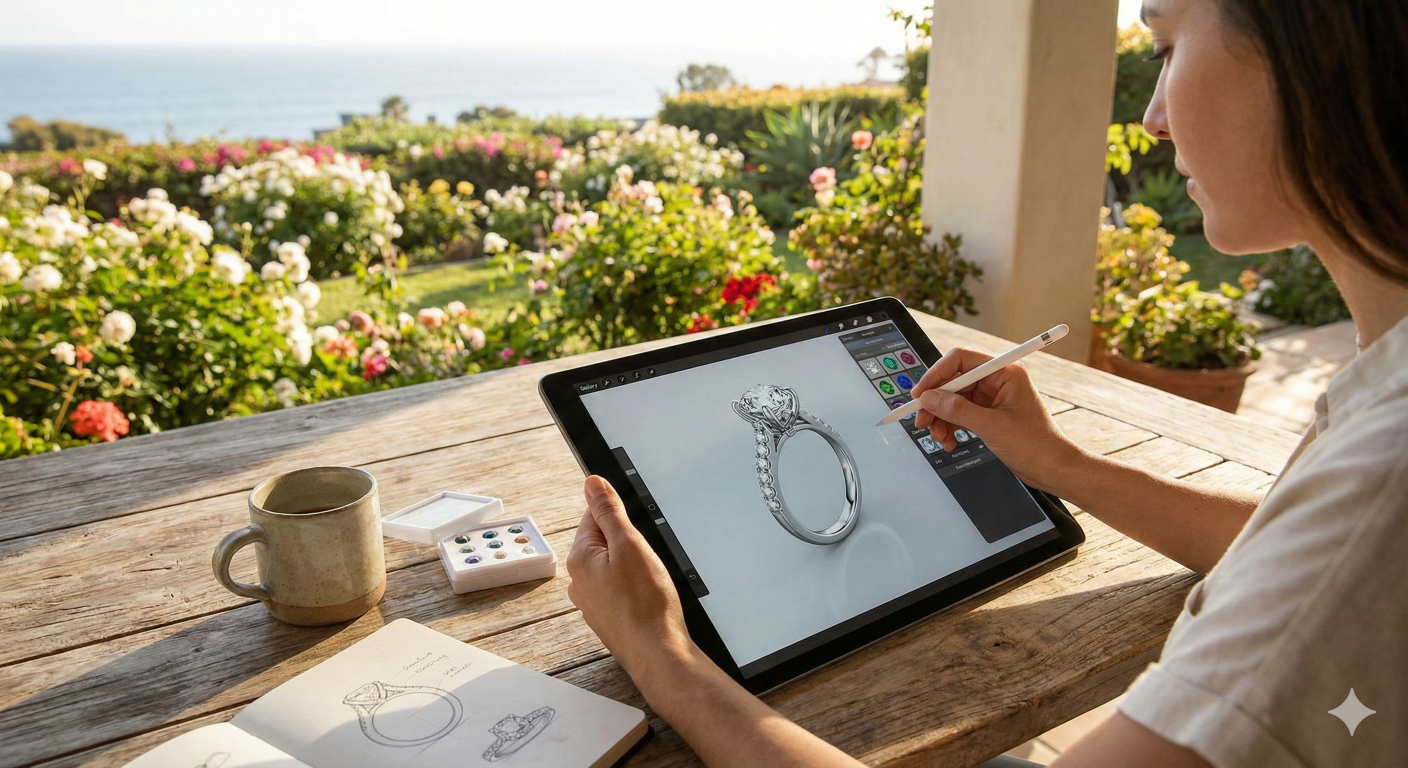
Platforms like Pencil sit in the middle by offering professional CAD tools that don't require prior experience, along with direct manufacturer access and instant product image publishing. This all-in-one approach has made professional jewelry design accessible to people who previously would have spent years learning traditional software.
Best online ring design platforms
The right platform depends on whether you're a consumer creating one piece, an entrepreneur building a business, or an established brand expanding your offerings. Here's what each major option brings to the table.
Pencil
Pencil is an all-in-one platform where you can design, manufacture, and sell jewelry from the same place. The CAD tools are production-ready but don't require any prior software experience, which makes it particularly useful for entrepreneurs and brands who want to move quickly. You can design a ring, generate realistic product images, connect with manufacturers, and publish interactive 3D viewers to your website—all without switching between different services.
Gemvision
Gemvision offers professional CAD software with advanced capabilities for creating detailed, intricate pieces. The tradeoff is that it requires significant training to use effectively and comes with substantial licensing costs. Established jewelry professionals who create complex custom work regularly tend to get the most value from it.
MatrixGold
MatrixGold is widely considered industry-standard CAD software among professional jewelers. It provides powerful parametric design tools and extensive component libraries, though the learning curve is steep and the price reflects its professional positioning. Designers with existing technical expertise who work on complex pieces tend to favor it.
CounterSketch
CounterSketch was built as an in-store and online customization tool that retailers could use with customers to visualize designs together. However, the platform is no longer being actively developed and will be shut down without ongoing support—making it a risky choice for anyone evaluating options today.
RhinoGold
RhinoGold works as a plugin for Rhino 3D, adding jewelry-specific design tools to that existing software. If you already know Rhino's interface, this extension feels natural. If you don't, you're looking at learning two systems simultaneously, which adds complexity.
3Design
3Design provides parametric jewelry design software that balances accessibility with professional output. The learning curve is gentler than MatrixGold or Gemvision while still producing production-ready files, making it a middle-ground option for designers who want capable tools without the steepest learning requirements.
JWEEL
JWEEL focuses on the consumer experience, allowing shoppers to personalize jewelry designs online. The platform prioritizes ease of use for individuals creating one-off pieces rather than professional design capabilities, so it works better for personal purchases than business use.
Shapeways
Shapeways operates as a 3D printing marketplace that includes jewelry among its product categories. You can upload your own designs or customize existing templates, and Shapeways handles production. This works well if you already have 3D files and want straightforward manufacturing access without managing vendor relationships.
StoneAlgo
StoneAlgo primarily helps users search for and compare diamonds using detailed analysis tools. While it includes a ring builder feature, the platform has received criticism for poor quality that doesn't accurately represent real life jewelry—worth considering if realistic designs matter to your decision.
Features to look for in a custom ring builder
Not every platform offers the same capabilities, and understanding which features matter for your situation helps narrow down options quickly.
Intuitive design interface
The best platforms use drag-and-drop tools and visual editors that make designing feel natural rather than technical. Real-time previews that update as you make changes let you see exactly how each decision affects the final piece. Some platforms, like Pencil, eliminate the need for CAD training entirely—you can create professional designs on your first day using the software.
Customization range
Customization options refer to the variables you can adjust: metals, settings, stone types, engravings, band widths, and similar details. A platform with limited options might work for simple designs, but truly unique pieces require extensive flexibility. Some platforms offer millions of possible combinations while others restrict you to a handful of preset choices.
3D visualization and rendering
Seeing a realistic preview before manufacturing prevents expensive mistakes and helps communicate designs to clients. Rendering—the process of generating lifelike images from your 3D design—varies dramatically in quality between platforms. The best tools produce images that look nearly identical to photographs of finished jewelry.
Manufacturing connections
Some platforms connect you directly with production facilities, which eliminates the work of finding and vetting manufacturers independently. Direct connections often mean better pricing and faster turnaround because there's no middleman coordinating between you and the factory.
File export options
The ability to download production-ready files in a standard format like STL matters if you have existing manufacturing partners or want flexibility in how pieces get produced. Some platforms lock you into their manufacturing network exclusively, while others let you take your files anywhere.
How to design your own engagement ring online
The general process stays similar across most platforms, though specific interfaces and options vary. Here's what the typical workflow looks like.
1. Select a base design or template
Most platforms offer starting templates rather than requiring you to build from nothing. You might choose a classic solitaire, a vintage halo, or a modern tension setting as your foundation, then customize from there.
2. Choose your metal type
Common options include yellow gold, white gold, rose gold, platinum, and silver in various karats or purities. Each metal has different properties affecting durability, color, and price.
3. Pick your setting style
The setting holds the center stone and dramatically affects the ring's overall look. A few common types:
- Prong setting: Metal claws grip the stone, maximizing light exposure and sparkle
- Bezel setting: A metal rim surrounds the stone's edge, offering more protection for active lifestyles
- Halo setting: Smaller stones encircle the center stone, adding sparkle and making it appear larger
4. Select stone shape and cut
Shape refers to the stone's outline—round, oval, princess, cushion, emerald, or pear. Cut describes how the facets are arranged to reflect light. Round brilliant remains the most popular choice, though fancy shapes have grown increasingly common.
5. Preview and finalize your design
Before production begins, you'll review your design through 3D previews or rendered images. This is your chance to make adjustments and confirm everything looks right. Some platforms provide interactive 3D viewers that let you examine the ring from every angle.
How much does a custom ring setting cost
Pricing varies significantly based on several factors, which makes universal numbers difficult to provide. Here's what typically drives costs:
- Design complexity: Intricate details, multiple stones, and unusual shapes increase production costs compared to simpler designs
- Material selection: The type and amount of precious metal, plus gemstone quality and size, represent the largest cost variables
- Platform model: Some platforms charge separate design fees while others include design costs within production pricing
Platforms with direct manufacturer connections often provide more transparent pricing because they eliminate middlemen. You can see exactly what production will cost before committing.
How to choose the right ring design platform
Your ideal platform depends entirely on what you're trying to accomplish. A consumer designing one engagement ring has very different priorities than a brand launching a custom jewelry line.
For consumers designing personal rings
User-friendly platforms with guided builders work best for creating a single piece. Step-by-step interfaces that walk you through each decision without requiring technical knowledge make the process straightforward. Visualization quality matters here—you want to see exactly what you're getting before committing money.
For jewelry entrepreneurs and startups
Platforms that combine design tools with selling capabilities and manufacturer access provide the most value when building a business. The ability to design, produce, and publish products from one place eliminates the complexity of coordinating multiple vendors. Pencil serves this audience particularly well, offering everything needed to go from idea to sellable product quickly.
For established jewelry brands
Advanced customization, white-label capabilities, and integration with existing systems matter most for established operations. Platforms that scale with your volume and offer flexibility to maintain your brand identity throughout the customer experience tend to fit best.
Build your own ring without CAD software
Traditional jewelry design required expensive CAD software and months or years of training. This created a significant barrier for anyone who wanted to bring jewelry ideas to life but couldn't invest that time and money upfront.
Modern platforms have removed this barrier. Pencil, for example, offers production-ready CAD tools that require no prior experience—you can create professional-quality designs immediately. The platform handles technical complexity behind the scenes while presenting an intuitive interface.
This shift has opened the industry to entrepreneurs, artists, and brands who previously couldn't participate. Professional jewelry creation is no longer limited to people with specialized training.
Ready to start designing? Create your first ring for free and see how quickly you can go from concept to production-ready design.
FAQs about online custom ring designers
Which online jewelry design platform is the most trusted?
Trust typically comes down to user reviews, years in operation, and transparent manufacturing processes. Platforms with established designer communities and verifiable track records—like Pencil with its community of over 90,000 designers—tend to inspire more confidence than newer or less transparent options.
How long does it take to receive a custom designed ring?
Timelines vary by platform and manufacturer but typically range from two to six weeks. Simpler designs with readily available materials arrive faster than intricate pieces requiring specialized work.
Can I design a ring online and have it made by a local jeweler?
Many platforms allow file downloads in standard formats (STL, 3DM) that local jewelers can use for production. This gives you flexibility to work with trusted local craftspeople while still using digital design tools.
Do I need special software to use an online ring builder?
Most modern platforms run entirely in your browser and require no software installation. You can typically start designing immediately from any computer with internet access.
Can I sell custom rings I design on these platforms?
Some platforms support commercial use while others focus exclusively on personal purchases. Pencil specifically allows users to publish designs directly to websites with product images and interactive 3D viewers, making it straightforward to sell custom designs to customers.