The 10x Price Surge Coming for AI Jewelry Design Tools and What It Means
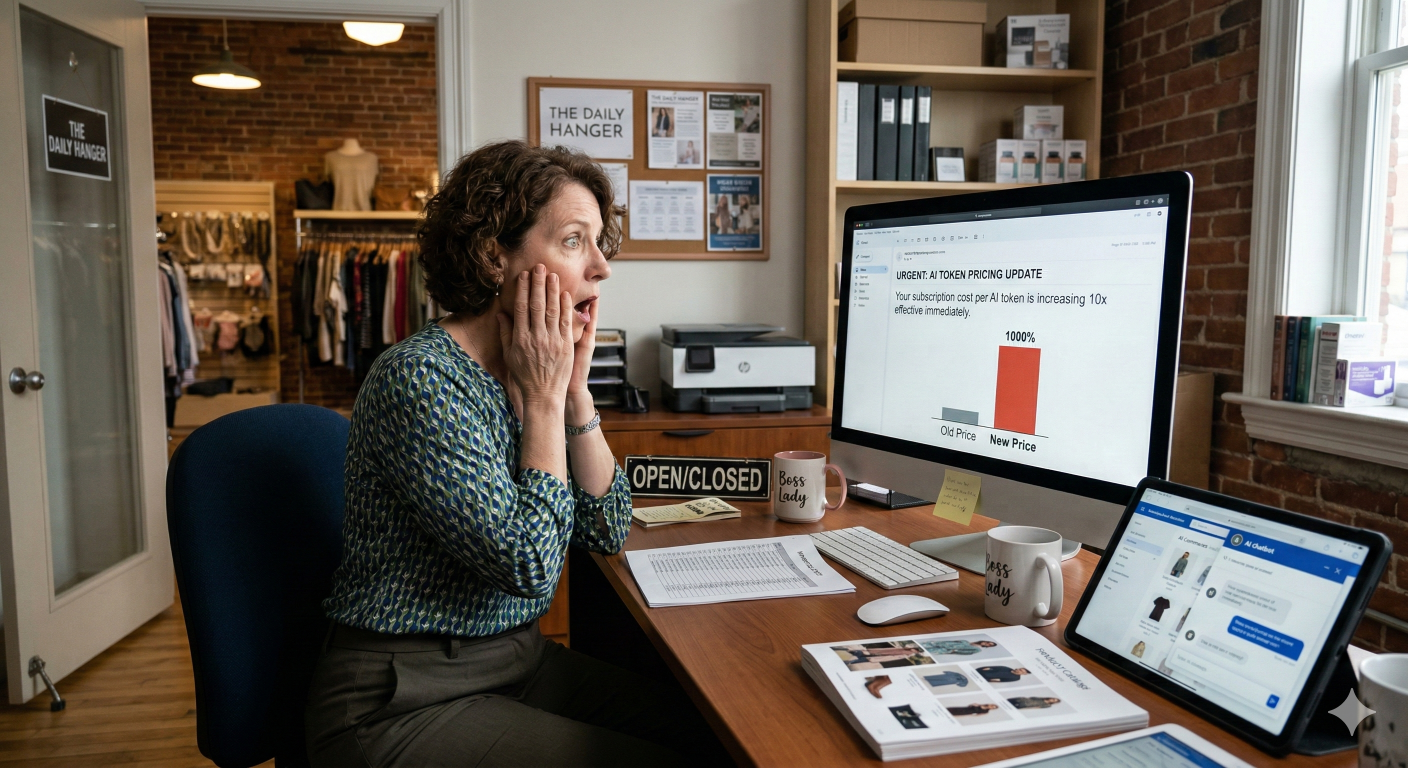
The AI tools you rely on for jewelry design are about to get a lot more expensive. Industry forecasts predict that AI image generation platforms could raise prices by 10x or more as the venture capital subsidies currently keeping costs low begin to disappear.
This isn't speculation—it's the predictable outcome of an unsustainable business model reaching its breaking point. Below, we'll break down why these price increases are coming, which platforms face the greatest risk, and how jewelry designers can protect their businesses before the shift happens.
Why AI jewelry design tools are about to get expensive
The AI industry is heading toward a major pricing correction. Forecasts suggest that AI image generation platforms may raise prices by 10x to 25x to reflect actual operational costs. Right now, relatively affordable AI subscriptions exist because venture capital subsidies cover the gap between what users pay and what the technology actually costs to run. When those subsidies disappear—and they will—the true expense of energy and compute infrastructure gets passed directly to you.
For jewelry designers using AI-powered tools to generate product images or design variations, this shift changes everything about how you budget for software. A platform that costs $30 per month today could cost $300 or more once subsidies end.
So why is this happening? Foundational AI models—the large-scale systems powering image generators and design assistants—have been operating at a loss. Companies like OpenAI and Stability AI prioritized user growth over profitability, betting that scale would eventually justify the investment. Investors are now expecting returns on those bets, and that means prices go up.
What a 10x price increase means for your jewelry business
A tenfold jump in AI tool costs isn't just annoying—it fundamentally changes the math of running a jewelry design business. What felt like an affordable shortcut becomes a significant expense.
Per-image cost projections for AI generated product photos
Right now, generating a single AI product image might cost a few cents when factored into your subscription. At 10x pricing, that same image could run $0.50 to $2.00 or more.
If you're generating 50 product images per month, that might currently be included in a $30 subscription. At projected rates, the same output could cost $150-300 monthly. The per-image economics shift dramatically.
Impact on scaling your product catalog
Jewelry businesses offering extensive customization face particular challenges here. Generating images for multiple metal types, stone options, and size variations means you might need hundreds of images per product line.
A catalog of 100 base designs with 10 variations each equals 1,000 images. At $1 per image, that's $1,000 just for initial product photography—before any revisions or seasonal updates.
Effects on custom jewelry design services
Custom jewelry designers who show clients AI-generated previews before production will feel this squeeze most directly. Each client consultation involving multiple design options becomes a cost center.
Some designers currently generate 5-10 preview images per client at essentially no marginal cost. When each image carries a real price tag, you'll either absorb those costs, pass them to clients, or limit how many previews you offer.
How foundational AI models currently subsidize their costs
Foundational models are large-scale AI systems trained on massive datasets that power downstream applications. Think of them as infrastructure—companies like OpenAI, Anthropic, and Stability AI build these models, and other companies build products on top of them.
These foundational model providers currently operate with significant subsidies:
- Venture capital funding: Billions of dollars from investors cover the gap between what users pay and what compute actually costs.
- Market share strategy: AI companies price low to build user bases, betting that once you're dependent on their tools, you'll pay more later. This mirrors the playbook Uber used with ride subsidies.
- Loss-leader approach: Current pricing doesn't reflect true infrastructure and energy costs. Some estimates suggest AI companies lose money on every query, hoping to make it up through volume and future price increases.
This model works when growth is the priority. It stops working when investors want returns.
Why the AI pricing subsidy cannot last
Several pressures are converging to force AI companies toward sustainable pricing.
First, investor patience is running out. After years of funding AI development, venture capitalists and corporate investors expect returns. OpenAI's recent moves toward for-profit restructuring signal this shift clearly.
Second, energy costs are climbing. Data centers powering AI have driven significant increases in power generation equipment costs. These expenses eventually flow downstream to users.
Third, compute demand outpaces supply. GPU shortages continue to constrain capacity while demand for AI services grows. When supply is limited and demand is high, prices rise.
The current era of affordable, high-volume AI image generation is likely ending as companies shift from subsidized, growth-focused pricing to sustainable, cost-covering models.
Which AI jewelry design platforms face the biggest risk
Not all jewelry design tools will be affected equally. The key factor is how dependent a platform is on third-party AI services versus proprietary technology.
Platforms built entirely on third-party AI APIs
Tools like BLNG AI and Facet Flow that rely exclusively on external AI image generation services face the most exposure. When upstream providers raise prices, these platforms have no choice but to pass costs to users or shut down.
These platforms essentially resell AI capabilities with a jewelry-focused interface. They add value through specialization, but they don't control their core technology costs.
Tools using multiple AI image generation services
Some platforms stack multiple AI services—one for image generation, another for background removal, another for upscaling. Each service represents a separate cost that could increase independently.
The compounding effect can be severe. If three services each raise prices by 5x, the combined impact on the platform's costs multiplies.
Startups without proprietary rendering infrastructure
Newer entrants to the jewelry design space often lack resources to build their own rendering technology. They've relied on AI as a shortcut to market, which made sense when AI was cheap.
As AI costs rise, these startups face a difficult choice: raise prices dramatically, build proprietary technology (expensive and time-consuming), or exit the market entirely.
Why AI image generation platforms are most vulnerable to price increases
AI image generation has a specific cost structure that makes it particularly exposed to price increases compared to other software categories.
High compute costs per generated image
Every AI-generated image requires significant GPU processing power. Unlike traditional software where the same code runs regardless of usage, AI image generation consumes expensive compute resources with every single output.
This differs fundamentally from CAD-based 3D rendering, where computational requirements are more predictable and don't depend on external AI infrastructure.
Complete dependency on external model providers
Most AI image generation tools don't train their own models—they use APIs from providers like Stability AI, Midjourney, or OpenAI. This means they have zero control over their primary cost input.
When OpenAI raises API prices, every downstream platform using their service feels the impact immediately.
No control over upstream AI pricing changes
Platforms built on third-party AI have no negotiating leverage. They're price-takers, not price-makers. If their provider doubles prices tomorrow, they either absorb the cost, pass it to users, or find an alternative provider—if one exists at comparable quality.
Alternatives to AI-dependent jewelry design platforms
The coming price increases make it worth evaluating alternatives that don't carry the same cost volatility.
CAD-based 3D rendering platforms
Platforms using deterministic 3D rendering produce lifelike product images without relying on AI image generation. The rendering is based on mathematical models of light and materials, not neural networks requiring expensive GPU inference.
Pencil, for example, uses this approach—offering production-ready CAD design tools that generate professional product images through 3D rendering rather than AI. Your hundredth render costs the same as your first.
Hybrid design solutions
Some tools blend traditional CAD with selective AI features. These platforms use AI for specific tasks (like generating design inspiration) while relying on conventional rendering for final product images.
This approach limits AI exposure to non-critical parts of the workflow, reducing vulnerability to price increases.
Traditional product photography workflows
Physical photography remains an option, though it comes with higher upfront costs for samples, equipment, and studio time. For established businesses with stable product lines, this approach offers complete independence from AI pricing.
The tradeoff is speed and flexibility—you can't photograph a design that doesn't physically exist yet.
How to protect your jewelry business from AI price volatility
Taking action before prices increase gives you more options and negotiating power.
1. Audit your current platform dependencies
Start by mapping which tools in your workflow rely on third-party AI services. Check your software providers' documentation or ask their support teams directly about their technology stack.
Look for phrases like "powered by," "built on," or "using" followed by AI company names. These indicate dependency on external services.
2. Evaluate total cost of ownership across tools
Calculate what a 5x or 10x price increase would mean for your current software stack. Include not just subscription costs but also per-image or per-generation fees.
3. Diversify your jewelry design tool stack
Relying on a single AI-dependent platform concentrates your risk. Spreading your workflow across multiple tools—including at least one that doesn't depend on AI image generation—provides fallback options if your primary platform raises prices or shuts down.
4. Consider platforms with proprietary technology
Prioritize tools that own their rendering infrastructure rather than renting it from AI providers. Pencil's production-ready CAD system generates lifelike product images using 3D rendering technology that doesn't depend on volatile AI pricing.
What jewelry designers can do before AI prices rise
The window for preparation is limited. Industry analysts suggest significant price increases could arrive within 6-12 months as foundational model providers seek profitability.
Jewelry designers who act now have the advantage of choosing alternatives on their own timeline rather than scrambling when prices spike. Those who wait may find themselves locked into expensive contracts or forced to make rushed decisions.
The good news is that alternatives exist. CAD-based platforms like Pencil offer the same end result—professional, lifelike product images—without the AI pricing uncertainty. With over 90,000 designers already using the platform and more than five million customization options available, the transition doesn't mean sacrificing capability.
Start for free and explore how production-ready CAD design can protect your business from the coming AI price surge.
FAQs about AI jewelry design tool pricing
How soon will jewelry designers see AI tool prices increase?
Industry forecasts suggest significant increases could arrive within 6-12 months. Some platforms may implement gradual increases, while others might announce sudden price changes as their upstream costs rise.
Will all AI jewelry design platforms raise prices at the same rate?
Platforms with proprietary technology and infrastructure will likely see smaller increases than those entirely dependent on third-party AI APIs. The degree of dependency directly correlates with pricing vulnerability.
Can jewelry designers lock in current pricing with existing AI providers?
Some providers may offer long-term contracts, but most AI companies have reserved the right to adjust pricing as their costs change. Reading your terms of service carefully is worthwhile—many include clauses allowing price changes with minimal notice.
What happens to existing jewelry designs if switching to a new platform?
Most professional jewelry design platforms support standard 3D file formats like STL, OBJ, or STEP, allowing designers to export their work and migrate to new tools. Before committing to any platform, verifying export capabilities is a good idea.
Are there jewelry design tools that do not rely on third-party AI services?
Yes. CAD-based platforms like Pencil use proprietary 3D rendering technology rather than AI image generation. These tools produce professional product images through mathematical rendering rather than neural network inference, offering more predictable and stable pricing.